Showing posts with label Food and delicacies 饮食. Show all posts
Showing posts with label Food and delicacies 饮食. Show all posts
Saturday, March 8, 2025

Thursday, November 28, 2024
Sunday, March 20, 2022
一而海鲜烧腊饭店
海港小鎮豐盛港三代傳承燒臘海鮮飯店- Restoran Eelo 一而海鲜烧腊饭店
位於柔佛州的豐盛港(Mersing) 是個以海產盛行的海港小鎮。作為著名渡假海島刁曼島(Pulau Tioman) 的主要港口碼頭,疫情前也是國內外旅客聚集的觀光勝地。
而在這樣的海港小鎮,除了有許多著名的海鮮餐館之外,有這麼一家海鮮飯店,其店裡所售賣的燒臘特別令主編喜愛,每回到來都會前来品嚐,它是老字號之一的一而海鮮燒臘飯店。
店家創立於1958年,營業至今64年,目前已傳承至第三代。店面位於市中心交通繁華的大路旁,過去總是有著許多國內外旅客於店內用餐,雖然疫情關係,旅客少了,但仍然不減店家的人氣,客源依舊,來到時還等了一下位子。
🥢入座點餐🥢
🍛燒臘雙拼🍛
主編個人來到必定會點的一定還是燒臘雙拼,即燒肉+叉燒。剛剛新鮮出爐的脆皮燒肉,咬下去是喀嚓的脆皮聲,在來能吃到那焦香且帶鹹香,咬起來帶著嚼勁的口感,叉燒當然選喜愛的半肥瘦,口感吃起來外實內嫩還夾帶滿滿到位的燒烤香,功夫依然還是優秀的,而主編喜歡這裡的油飯,做得香口且惹味,在配顆滷得剛剛好的滷蛋配點燒臘辣椒。便宜且實在。
店裡燒臘依舊由砍肉的老奶奶負責掌廚,中午時分外帶的客人絡繹不絕,之間老奶奶熟練的刀切工序流暢的在忙碌著。依舊還是主編喜歡的那個老味道。
後記:身為一家老字號海鮮飯店,這裡的煮炒當然也是很不錯的,下次有機會在專門為大家介紹吧。
⏰營業時間-早上11:30AM-3PM/晚上6PM-9PM
📌地址:
23D, Jalan Abu Bakar, 86800 Mersing, Johor
~FB Ando Food Hunt~


Monday, February 24, 2020
Pisang Goreng - Fried Banana
Pisang goreng (fried banana in Indonesian/Malay) is a snack made of banana or plantain, covered in batter or not, being deep fried in hot cooking oil, and is popular in Indonesia, Malaysia, Singapore, and Brunei.

Pisang goreng is most often associated with Indonesia, and indeed the country has the largest variety of pisang goreng recipes. However, this fried banana snack is also considered native to neighbouring countries; particularly Malaysia, Brunei and Singapore.
It is consumed as a snack in the morning and afternoon. In Indonesia and Malaysia, pisang goreng is often sold by street vendors, although some sellers have a storefront from which to sell their wares.
~Wikiepdia~

Pisang goreng is most often associated with Indonesia, and indeed the country has the largest variety of pisang goreng recipes. However, this fried banana snack is also considered native to neighbouring countries; particularly Malaysia, Brunei and Singapore.
It is consumed as a snack in the morning and afternoon. In Indonesia and Malaysia, pisang goreng is often sold by street vendors, although some sellers have a storefront from which to sell their wares.
~Wikiepdia~
Thursday, January 30, 2020
Popular Mersing 'lontong darat' attracts royal family
Popular Mersing 'lontong darat' attracts royal family
For the Malay community in Johor, ‘lontong kering’ is quite a popular dish and often a favourite breakfast choice for local residents before they start their daily activities.

Generally, people know lontong as a dish of ‘nasi impit’ (compressed rice cake) eaten with vegetables cooked in coconut milk, known as ‘sayur lodeh’. However, in Johor, lontong is enjoyed dry without gravy but with a selection of side dishes such as chicken or beef rendang, ‘serunding’ (meat floss) and mixed vegetables of long beans, beancurd and tempeh (fermented soya beans).
Suria Hassan, a restaurant operator at Simpang Tiga, Kampung Sri Pantai, near here, has been commercialising the ‘lontong kering’ as ‘lontong darat’ for the past two years and has been enjoying brisk business since it went viral on social media.
She was also fortunate that the Sultan of Johor, Sultan Ibrahim Almarhum Sultan Iskandar had visited the restaurant a number of times and enjoyed ‘lontong darat’ with beef rendang, as well as ‘roti canai’ (flatbread).
“A variety of menu options like meat floss, beef and chicken rendang, and ‘sambal paru’ to combine with the ‘nasi impit’, peanut sauce and Javanese vegetable dish, certainly gives a unique flavour to visitors, especially those coming from outside Johor,” she told Bernama when met here recently.
The 31-year-old from Pasir Gudang had taken over the business set up 20 years ago and run by her mother-in-law and late father-in-law, Salmah Ahmad and Abdul Rahman Sharol, after she got married about 10 years ago.
To further develop her restaurant, Cik Tik Corner, the mother of two is actively promoting her business through social media such as Facebook, as well as using cash-on-delivery service for Mersing customers.
“We also offer free breakfast to pregnant women every Thursday and for those celebrating their birthdays, they only need to show their identification card to enjoy the free breakfast,” she said.
Suria has plans to expand her restaurant business by opening up a branch in another district due to the high demand from customers residing outside Mersing.
“Therefore, I hope there is financial assistance or equipment including dishes display rack to expand my business as well as attract more visitors to Mersing, especially in conjunction with Visit Malaysia Year and Visit Johor Year 2020,” she added.
The restaurant, which operates daily except on Fridays, offers ‘lontong darat’ from as low as RM5 to RM10 and customers can also enjoy a variety of dishes such as ‘roti canai’, ‘nasi lemak’, fried rice, ‘soto’, noodles and also an array of ‘kuih’.
-- BERNAMA
For the Malay community in Johor, ‘lontong kering’ is quite a popular dish and often a favourite breakfast choice for local residents before they start their daily activities.
Generally, people know lontong as a dish of ‘nasi impit’ (compressed rice cake) eaten with vegetables cooked in coconut milk, known as ‘sayur lodeh’. However, in Johor, lontong is enjoyed dry without gravy but with a selection of side dishes such as chicken or beef rendang, ‘serunding’ (meat floss) and mixed vegetables of long beans, beancurd and tempeh (fermented soya beans).
Suria Hassan, a restaurant operator at Simpang Tiga, Kampung Sri Pantai, near here, has been commercialising the ‘lontong kering’ as ‘lontong darat’ for the past two years and has been enjoying brisk business since it went viral on social media.
She was also fortunate that the Sultan of Johor, Sultan Ibrahim Almarhum Sultan Iskandar had visited the restaurant a number of times and enjoyed ‘lontong darat’ with beef rendang, as well as ‘roti canai’ (flatbread).
“A variety of menu options like meat floss, beef and chicken rendang, and ‘sambal paru’ to combine with the ‘nasi impit’, peanut sauce and Javanese vegetable dish, certainly gives a unique flavour to visitors, especially those coming from outside Johor,” she told Bernama when met here recently.
The 31-year-old from Pasir Gudang had taken over the business set up 20 years ago and run by her mother-in-law and late father-in-law, Salmah Ahmad and Abdul Rahman Sharol, after she got married about 10 years ago.
To further develop her restaurant, Cik Tik Corner, the mother of two is actively promoting her business through social media such as Facebook, as well as using cash-on-delivery service for Mersing customers.
“We also offer free breakfast to pregnant women every Thursday and for those celebrating their birthdays, they only need to show their identification card to enjoy the free breakfast,” she said.
Suria has plans to expand her restaurant business by opening up a branch in another district due to the high demand from customers residing outside Mersing.
“Therefore, I hope there is financial assistance or equipment including dishes display rack to expand my business as well as attract more visitors to Mersing, especially in conjunction with Visit Malaysia Year and Visit Johor Year 2020,” she added.
The restaurant, which operates daily except on Fridays, offers ‘lontong darat’ from as low as RM5 to RM10 and customers can also enjoy a variety of dishes such as ‘roti canai’, ‘nasi lemak’, fried rice, ‘soto’, noodles and also an array of ‘kuih’.
-- BERNAMA
Monday, January 28, 2019
Sup Kambing

Sup Kambing or Sop Kambing is a mutton soup commonly found in Indonesian cuisine and Malaysian cuisine. It is prepared with goat meat, tomato, celery, spring onion, ginger, candlenut and lime leaf, its broth is yellowish in color.
~wikipedia~
Wednesday, January 16, 2019
Kopitiam

A kopitiam or kopi tiam is a traditional coffee shop patronised for meals and beverages, predominantly operated by Chinese proprietors and especially members of the Hainanese community. The word kopi is a Malay/Hokkien term for coffee and tiam is the Hokkien and Hakka term for shop (Chinese : 店).
A common sight in Malaysia and neighbouring Singapore, menus often feature offerings like nasi lemak, boiled eggs, roti bakar, noodle dishes, bread and kuih. The owners of some kopitiam establishments may lease premise space to independent stallholders, who sometimes offer more specialised dishes beyond standard Chinese kopitiam fare.
Typical beverages include Milo, a malted chocolate drink considered iconic to Malaysians of all ages, as well as coffee (kopi) and tea (teh). Diners would use slang terms specific to kopitiam culture to order and customise drinks to their taste.
~wikipedia~
Monday, November 12, 2018
Laksa
Laksa is a spicy noodle soup popular in Peranakan cuisine. Laksa consists of rice noodles or rice vermicelli with chicken, prawn or fish, served in spicy soup based on either rich and spicy curry coconut milk or on sour asam (tamarind or gelugur). Laksa is found in Malaysia, Singapore, Indonesia, and Southern Thailand.
The type of laksa is based upon the soup base employed in its recipe; either rich and savoury coconut milk, fresh and sour asam (tamarind, gelugur or kokum), or the combination of the two.
There are three basic types of laksa: curry laksa, asam laksa, and other variant that can be identified as either curry or asam laksa.
Curry laksa is a coconut milk curry soup with noodles, while asam laksa is a sour, most often tamarind-based, soup with noodles. Thick rice noodles also known as laksa noodles are most commonly used, although thin rice vermicelli (bee hoon or mee hoon) are also common, and some recipes might create their own rice noodle from scratch. Some variants might use other types of noodles; Johor laksa for example uses spaghetti, while a fusion recipe might use Japanese udon noodle.

Laksa lemak, also known as nyonya laksa (Malay: Laksa nyonya), is a type of laksa with a rich coconut gravy. Lemak is a culinary description in the Malay language which specifically refers to the presence of coconut milk which adds a distinctive richness to a dish. As the name implies, it is made with a rich, slightly sweet and strongly spiced coconut gravy. Laksa lemak is usually made with a fish-based gravy (with vegetarian food stalls omitting fish) and quite similar to Thai laksa (Malay: Laksa Thai), perhaps to the point that one could say they are one and the same.

Asam laksa is a sour, fish and tamarind-based soup. Penang Asam Laksa listed at number 26th on World's 50 most delicious foods compiled by CNN Go in 2011. Asam is the Malay word for any ingredients that makes a dish tastes sour (e.g. tamarind, gelugur or kokum). Laksa typically uses asam keping, known as kokum in the English speaking world, which is a type of dried slices of sour mangosteens.
The modern Malay spelling is asam, though the spelling assam is still frequently used.
The main ingredients for asam laksa include shredded fish, normally kembung (small mackerel of the Rastrelliger genus), and finely sliced vegetables including cucumber, onions, red chillies, pineapple, lettuce, common mint, daun kesum (Vietnamese mint or laksa mint), and pink bunga kantan (torch ginger). Asam laksa is normally served with either thick rice noodles or thin rice noodles (vermicelli). And topped off with petis udang or "hae ko" (蝦膏), a thick sweet prawn/shrimp paste.


Source: Wikipedia and Facebook
The type of laksa is based upon the soup base employed in its recipe; either rich and savoury coconut milk, fresh and sour asam (tamarind, gelugur or kokum), or the combination of the two.
There are three basic types of laksa: curry laksa, asam laksa, and other variant that can be identified as either curry or asam laksa.
Curry laksa is a coconut milk curry soup with noodles, while asam laksa is a sour, most often tamarind-based, soup with noodles. Thick rice noodles also known as laksa noodles are most commonly used, although thin rice vermicelli (bee hoon or mee hoon) are also common, and some recipes might create their own rice noodle from scratch. Some variants might use other types of noodles; Johor laksa for example uses spaghetti, while a fusion recipe might use Japanese udon noodle.

Laksa lemak, also known as nyonya laksa (Malay: Laksa nyonya), is a type of laksa with a rich coconut gravy. Lemak is a culinary description in the Malay language which specifically refers to the presence of coconut milk which adds a distinctive richness to a dish. As the name implies, it is made with a rich, slightly sweet and strongly spiced coconut gravy. Laksa lemak is usually made with a fish-based gravy (with vegetarian food stalls omitting fish) and quite similar to Thai laksa (Malay: Laksa Thai), perhaps to the point that one could say they are one and the same.

Asam laksa is a sour, fish and tamarind-based soup. Penang Asam Laksa listed at number 26th on World's 50 most delicious foods compiled by CNN Go in 2011. Asam is the Malay word for any ingredients that makes a dish tastes sour (e.g. tamarind, gelugur or kokum). Laksa typically uses asam keping, known as kokum in the English speaking world, which is a type of dried slices of sour mangosteens.
The modern Malay spelling is asam, though the spelling assam is still frequently used.
The main ingredients for asam laksa include shredded fish, normally kembung (small mackerel of the Rastrelliger genus), and finely sliced vegetables including cucumber, onions, red chillies, pineapple, lettuce, common mint, daun kesum (Vietnamese mint or laksa mint), and pink bunga kantan (torch ginger). Asam laksa is normally served with either thick rice noodles or thin rice noodles (vermicelli). And topped off with petis udang or "hae ko" (蝦膏), a thick sweet prawn/shrimp paste.


Source: Wikipedia and Facebook
Thursday, November 1, 2018
Apam Balik
Apam balik (English: 'turnover pancake') or terang bulan (English: 'bright moon') or martabak manis (English: 'sweet martabak') common in Southeast Asia. It is usually sold at specialist roadside stalls throughout Brunei, Indonesia, Malaysia and Singapore.

The pancake's batter is made from a mixture of flour, eggs, sugar, baking soda, coconut milk and water. The batter is cooked upon a thick round iron frying pan in plenty of palm margarine to avoid it sticking to the pan.
Then other ingredients are sprinkled as filling; the most common or traditional is crushed peanut granules with sugar and sweetcorn kernels (available from cans), but modern innovations such as chocolate sprinkles and cheddar cheese are also available. Then, the pancake is folded (hence the name: "turnover pancake") and cut into several pieces.
The texture of the apam balik can vary depending on the amount of batter and type of pan used, from one that is akin to a crispier form of crumpets to small thin light pancake shells that break when bitten (the latter is usually called apam balik nipis, 'thin apam balik').
The dish has been declared a heritage food by the Malaysian Department of National Heritage.
~wikipedia~

The pancake's batter is made from a mixture of flour, eggs, sugar, baking soda, coconut milk and water. The batter is cooked upon a thick round iron frying pan in plenty of palm margarine to avoid it sticking to the pan.
Then other ingredients are sprinkled as filling; the most common or traditional is crushed peanut granules with sugar and sweetcorn kernels (available from cans), but modern innovations such as chocolate sprinkles and cheddar cheese are also available. Then, the pancake is folded (hence the name: "turnover pancake") and cut into several pieces.
The texture of the apam balik can vary depending on the amount of batter and type of pan used, from one that is akin to a crispier form of crumpets to small thin light pancake shells that break when bitten (the latter is usually called apam balik nipis, 'thin apam balik').
The dish has been declared a heritage food by the Malaysian Department of National Heritage.
~wikipedia~
Monday, October 29, 2018
卤面
卤面是来源于福建漳州、泉州、兴化及福州一带的面食,与打卤面或淋面相似,先煮好一锅浓稠的卤汤,在顾客点餐后才将黄面烫熟盛进碗内,铺上铺料,淋上卤汤再撒上香菜或油葱酥端上。随着早期福建籍的移民大量移民至马来半岛一带,目前在马来西亚与新加坡福建社区的面食可轻易找到这道面食。

早期是闽南人神诞时作为供馔供奉神明的一道面食。后来社会经济好转,开始在婚礼或其他喜庆中开始食用。在马来西亚的卤面随着煮面方式的不同而分为两派,在以槟城为主的北马地区及新加坡,当地的卤面是依循漳州及福州卤面的做法,先将黄面烫熟之后,在淋上预先做好的卤汤,其中卤汤是以虾汤为底,加入了黑酱油、五香粉等,使得汤汁呈现深褐色,搭配的配料以卤肉片、排骨、卤蛋、香菇、鸡脚等为主,吃的时候会拌入参巴辣椒酱及乌醋,一般贩售福建面(虾面)的店家都会同时贩卖这道面食。
在以吉隆坡为主的中马地区,当地的卤面的煮法与泉州及兴化地区的类似,即面条与汤汁同煮,最后才加入地瓜粉勾芡且打入蛋花。当地的卤面又因为汤汁颜色的深浅可分为黑白两派。
在雪兰莪州的乌鲁音(Ulu Yam)当地的卤面在烹煮的过程中,会在卤汁中加入酱油及乌醋,据说是上世纪20年代,在当地有人在新加坡吃了当地的漳州式卤面后,念念不忘,便依样画葫芦,自创了加入黑酱油及乌醋版本的卤面,有别于吉隆坡与雪兰莪一带的白色卤面,深受当地人欢迎,因此在乌鲁音许多店家也开始推出这道面食,成为当地的代表性美食。
在中马其他地区的卤面则出现在华人的大排档内,将蒜末及比目鱼粉爆香后,加入高汤、面条、蔬菜、猪肉片、海鲜等,加盖将面条焖至熟透,最后勾芡及打入蛋花,加上猪油渣,以浅色的汤汁与食客相见,吃时才依个人的口味,自行加入乌醋调味。
~维基百科~
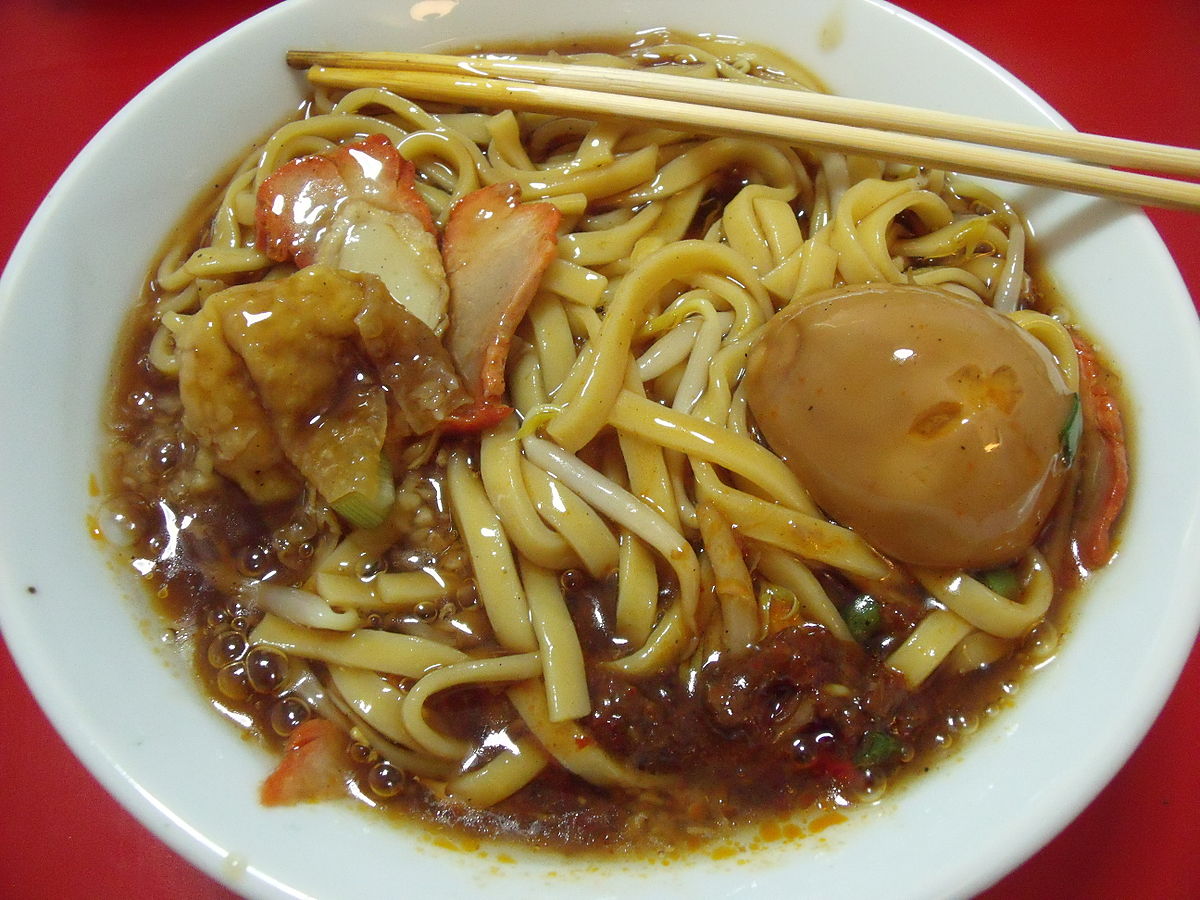
早期是闽南人神诞时作为供馔供奉神明的一道面食。后来社会经济好转,开始在婚礼或其他喜庆中开始食用。在马来西亚的卤面随着煮面方式的不同而分为两派,在以槟城为主的北马地区及新加坡,当地的卤面是依循漳州及福州卤面的做法,先将黄面烫熟之后,在淋上预先做好的卤汤,其中卤汤是以虾汤为底,加入了黑酱油、五香粉等,使得汤汁呈现深褐色,搭配的配料以卤肉片、排骨、卤蛋、香菇、鸡脚等为主,吃的时候会拌入参巴辣椒酱及乌醋,一般贩售福建面(虾面)的店家都会同时贩卖这道面食。
在以吉隆坡为主的中马地区,当地的卤面的煮法与泉州及兴化地区的类似,即面条与汤汁同煮,最后才加入地瓜粉勾芡且打入蛋花。当地的卤面又因为汤汁颜色的深浅可分为黑白两派。
在雪兰莪州的乌鲁音(Ulu Yam)当地的卤面在烹煮的过程中,会在卤汁中加入酱油及乌醋,据说是上世纪20年代,在当地有人在新加坡吃了当地的漳州式卤面后,念念不忘,便依样画葫芦,自创了加入黑酱油及乌醋版本的卤面,有别于吉隆坡与雪兰莪一带的白色卤面,深受当地人欢迎,因此在乌鲁音许多店家也开始推出这道面食,成为当地的代表性美食。
在中马其他地区的卤面则出现在华人的大排档内,将蒜末及比目鱼粉爆香后,加入高汤、面条、蔬菜、猪肉片、海鲜等,加盖将面条焖至熟透,最后勾芡及打入蛋花,加上猪油渣,以浅色的汤汁与食客相见,吃时才依个人的口味,自行加入乌醋调味。
~维基百科~
Roti John
Roti john is an omelette sandwich founded by a Malay who lived in Singapore during the British colonial times before being widely popular throughout the Malay Peninsula in present-day Malaysia.

Roti is the Hindi, Urdu and Malay word for bread, and more generally for any bread-based or bread-like food, including sandwiches and pancakes. The origin of john in the name is allegedly due to the Western origin of the baguette and British colonial rule in British Malaya and Singapore island.
The ingredients include minced meat (chicken or mutton), onion, egg, tomato-chilli sauce and a baguette-type loaf.
~Wikipedia~

Roti is the Hindi, Urdu and Malay word for bread, and more generally for any bread-based or bread-like food, including sandwiches and pancakes. The origin of john in the name is allegedly due to the Western origin of the baguette and British colonial rule in British Malaya and Singapore island.
The ingredients include minced meat (chicken or mutton), onion, egg, tomato-chilli sauce and a baguette-type loaf.
~Wikipedia~
Friday, October 12, 2018
餐饮业包括露天场合明年起禁烟
餐饮业包括露天场合明年起禁烟 违者罚1万或监2年

卫生部副部长李文材宣布,明年1月1日起,国内所有餐饮业包括露天经营者强制禁止烟民吸烟,违例者可被罚款1万令吉或监禁2年。
此外,他提醒业者,如果没有在经营的餐饮业设立禁止吸烟告示牌,也将被罚款2500令吉。
他说,政府此决定主要是让国民有健康的用餐环境。
李文材今日出席亚洲医学院为健康饮食研讨会开幕礼後,在记者会这麽表示。
~光华日报~

卫生部副部长李文材宣布,明年1月1日起,国内所有餐饮业包括露天经营者强制禁止烟民吸烟,违例者可被罚款1万令吉或监禁2年。
此外,他提醒业者,如果没有在经营的餐饮业设立禁止吸烟告示牌,也将被罚款2500令吉。
他说,政府此决定主要是让国民有健康的用餐环境。
李文材今日出席亚洲医学院为健康饮食研讨会开幕礼後,在记者会这麽表示。
~光华日报~
Tuesday, September 18, 2018
Asam Pedas
Asam Pedas
Asam Pedas (Indonesian and Malaysian Malay: Asam Pedas, Minangkabau: Asam Padeh, English: Sour and Spicy) is a Minangkabau and Malay sour and spicy fish stew dish. It is popular in Indonesia and Malaysia.

The spicy and sour fish dish is known widely in Sumatra and Malay Peninsula. It is part of the culinary heritage of both Minangkabau and Malay traditions, thus its exact origin is unclear. The Minang asam padeh can be easily found throughout Padang restaurants in Indonesia and Malaysia.
It has become a typical cuisine of Malays from Jambi, Riau, Riau Islands, Malacca, and as far north in Aceh. The spice mixture and the fish used might be slightly different according to the area.
~wikipedia~
Asam Pedas (Indonesian and Malaysian Malay: Asam Pedas, Minangkabau: Asam Padeh, English: Sour and Spicy) is a Minangkabau and Malay sour and spicy fish stew dish. It is popular in Indonesia and Malaysia.

The spicy and sour fish dish is known widely in Sumatra and Malay Peninsula. It is part of the culinary heritage of both Minangkabau and Malay traditions, thus its exact origin is unclear. The Minang asam padeh can be easily found throughout Padang restaurants in Indonesia and Malaysia.
It has become a typical cuisine of Malays from Jambi, Riau, Riau Islands, Malacca, and as far north in Aceh. The spice mixture and the fish used might be slightly different according to the area.
~wikipedia~
Sunday, September 9, 2018
丰盛港特色小吃—— Nasi Dagang,你有吃过吗?
丰盛港特色小吃—— Nasi Dagang,你有吃过吗?

丰盛港驰名手扒饭 Nasi Dagang,饭由普通米与糯米,椰浆煮出来的,传统的nasi dagang 通常用金枪鱼 属于马来饭,香蕉叶把饭与鱼片放入,淋上sambal 辣椒,香蕉叶回折拿一支椰骨签插入椰叶中固定。
地址:Jalan Makam Off Jalan Awang Daik,86800 Mersing Johor.
营业时间:7am-10am


丰盛港驰名手扒饭 Nasi Dagang,饭由普通米与糯米,椰浆煮出来的,传统的nasi dagang 通常用金枪鱼 属于马来饭,香蕉叶把饭与鱼片放入,淋上sambal 辣椒,香蕉叶回折拿一支椰骨签插入椰叶中固定。
地址:Jalan Makam Off Jalan Awang Daik,86800 Mersing Johor.
营业时间:7am-10am


Monday, September 3, 2018
Enjoy your satay, there’s no tax for it at food outlets
Enjoy your satay, there’s no tax for it at food outlets
IPOH: There will be no Sales and Service Tax on satay sold in food outlets, says Finance Minister Lim Guan Eng.
He said the SST on the popular Malaysian food was imposed during the processing stage for the purpose of packaging and sales.
“It is the sales that get the SST, not at the outlets,” he told reporters after a briefing on the SST at a hotel here yesterday.
Lim was replying to a question on whether the SST would be imposed on chicken or beef satay sold in food outlets, as it was among the items listed as taxable under “preparation of meat”.

He said failure to do so would mean that they could not charge the SST and would have to use their own funds to pay the tax to the government.
His call was echoed by Customs Department director-general Datuk Seri T. Subromaniam, who said friendly visits by the department found that there were still food providers who had not updated their systems.
“We advised them to update their systems so that the 6% service tax could be charged,” he said.
In Shah Alam, Domestic Trade and Consumer Affairs Ministry secretary-general Datuk Seri Jamil Salleh said the real impact of the SST on the prices of general goods was expected to be fully felt in the second week of its implementation.
This is because goods sold during the first week after the end of the tax holiday are actually tax-free.
Noting that traders had bought the goods during the tax holiday period, he said the tax-free stocks should be sold at prices minus the SST.
“However, some traders might want to take advantage of the situation but we are ready for that.
“We have mobilised 1,000 enforcement personnel to check against profiteering.
“Legal action will be taken against profiteers, and I want them to be severely punished to deter others from doing the same,” he said after visiting a juice-producing factory yesterday.
The Price Control and Anti-Profiteering Act provides a fine of up to RM100,000 or a three-year imprisonment upon conviction.
~News courtesy of The Star~
IPOH: There will be no Sales and Service Tax on satay sold in food outlets, says Finance Minister Lim Guan Eng.
He said the SST on the popular Malaysian food was imposed during the processing stage for the purpose of packaging and sales.
“It is the sales that get the SST, not at the outlets,” he told reporters after a briefing on the SST at a hotel here yesterday.
Lim was replying to a question on whether the SST would be imposed on chicken or beef satay sold in food outlets, as it was among the items listed as taxable under “preparation of meat”.
He said failure to do so would mean that they could not charge the SST and would have to use their own funds to pay the tax to the government.
His call was echoed by Customs Department director-general Datuk Seri T. Subromaniam, who said friendly visits by the department found that there were still food providers who had not updated their systems.
“We advised them to update their systems so that the 6% service tax could be charged,” he said.
In Shah Alam, Domestic Trade and Consumer Affairs Ministry secretary-general Datuk Seri Jamil Salleh said the real impact of the SST on the prices of general goods was expected to be fully felt in the second week of its implementation.
This is because goods sold during the first week after the end of the tax holiday are actually tax-free.
Noting that traders had bought the goods during the tax holiday period, he said the tax-free stocks should be sold at prices minus the SST.
“However, some traders might want to take advantage of the situation but we are ready for that.
“We have mobilised 1,000 enforcement personnel to check against profiteering.
“Legal action will be taken against profiteers, and I want them to be severely punished to deter others from doing the same,” he said after visiting a juice-producing factory yesterday.
The Price Control and Anti-Profiteering Act provides a fine of up to RM100,000 or a three-year imprisonment upon conviction.
~News courtesy of The Star~
Monday, August 27, 2018
Teh Tarik

Enjoy a good start of the day with a cuppa of our national drink, Teh Tarik which literally means 'pulled tea'. It is a hot Indian milk tea beverage.
Its name is derived from the pouring process of "pulling" the drink during preparation. It is made from black tea, condensed milk and evaporated milk.
In Malaysia, there are occasions where teh tarik brewers gather for competitions and performances to show their ability to drag a long stream of tea. ✌
~Tourism Malaysia FB~
Saturday, August 4, 2018
咖喱面

咖喱面(Curry Mee),又称咖喱叻沙(Curry Laksa),是一道由马来人、华人、娘惹等不同文化混合的面食料理。因马来半岛上有许多不同族群,加上地理分隔,造成不同族群及不同地方面在马来西亚和新加坡是一道非常常见的面食料理,几乎在大部分的路边摊、茶餐室、美食中心等都可见其踪影。
Nasi Lemak

Nasi lemak is a Malay fragrant rice dish cooked in coconut milk and pandan leaf. It is commonly found in Malaysia, where it is considered the national dish; it is also popular in neighbouring areas such as Singapore; Brunei, and Southern Thailand. In Indonesia it can be found in several parts of Sumatra; especially Malay realm of Riau, Riau Islands and Medan.
Nasi lemak can also be found in the Bangsamoro region of Mindanao prepared by Filipino Moro. It is considered one of the most famous dishes for a Malay-style breakfast. It is not to be confused with nasi dagang, sold in the Malaysian east coast states of Terengganu and Kelantan, although both dishes are often served for breakfast. However, because nasi lemak can be served in a variety of ways, it is often eaten throughout the day.
~Wikipedia~
Wednesday, July 18, 2018
马来料理 Malay Cuisine
马来料理 Malay Cuisine
椰浆饭Nasi Lemak
罗惹Rojak
沙嗲Satay
亚参叻沙Asam Laksa
叻沙Laksa
西米糕Ambuyat
马来烤鸡Ayam Bakar
马来炸鸡Ayam Goreng
亚参鱼Asam Pedas
马来烤鱼Ikan Bakar
马来粽Ketupat
竹筒饭Lemang
仁当Rendang
搭冈饭Nasi Dagang
马来炒饭Nasi Goreng
马来炒面Mee Goreng
爪哇面Mee Rebus
乌兰Ulam
亚杂Acar
马来鱼饼Kerepok
椰浆饭Nasi Lemak
罗惹Rojak
沙嗲Satay
亚参叻沙Asam Laksa
叻沙Laksa
西米糕Ambuyat
马来烤鸡Ayam Bakar
马来炸鸡Ayam Goreng
亚参鱼Asam Pedas
马来烤鱼Ikan Bakar
马来粽Ketupat
竹筒饭Lemang
仁当Rendang
搭冈饭Nasi Dagang
马来炒饭Nasi Goreng
马来炒面Mee Goreng
爪哇面Mee Rebus
乌兰Ulam
亚杂Acar
马来鱼饼Kerepok
Saturday, May 19, 2018
印度煎饼
印度煎饼(Roti canai)是种圆扁形的煎饼,是马来西亚嘛嘛档的一种受欢迎的食物。它被用来当早餐、午餐、下午茶与晚餐。常被用来与拉茶或冰茶配着一起吃。普遍上是配着达尔酱(素咖喱,马来西亚语叫做:dahl)或咖哩与小风尾鱼热辣酱料(马来语称sambal)一起吃。

印度煎饼的马来语是roti canai。Roti 指的是 "面包",在这里的意思是 "煎饼",而canai的意思是 "来回压扁",只因印度煎饼师傅在制作印度煎饼过程中把面团压扁,风晾及拉阔。也有传说canai的由来是源于在制作煎饼时一起使用的面团(channal)。另一种说法是canai一词源自印度的珍奈城(chennai),只因在当年大量印度人迁移至马来西亚淘金时,那时候的印度煎饼师傅都是来自印度的珍奈城的。
在印度与新加坡,印度煎饼也被称 "布拉塔"(prata)煎饼。印度煎饼与布拉塔煎饼的形状都是一样的,而布拉塔煎饼也保存了印度煎饼的特色:圆形,但是通常有馅料的都是方形,据说比较容易煎熟。
在马来西亚拥有多种口味,如下: Roti Kosong(无馅) Roti Telur(鸡蛋口味) Roti Pisang(香蕉口味) Roti Planta(牛油口味)等等 不同地区,口味各异
~中文维基百科~
Subscribe to:
Posts (Atom)